
By Marianna Parraga and Jonathan Saul
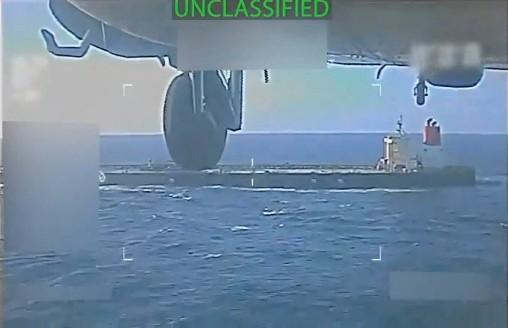
HOUSTON/LONDON, Dec 10 (Reuters) – More than 30 oil vessels sanctioned by the U.S. for doing business in Venezuela may face consequences after the Coast Guard seized a supertanker carrying Venezuelan crude intended for export, according to shipping data.
The seizure was announced by President Donald Trump on Wednesday and marks the first time an oil shipment from Venezuela has been intercepted. This action is part of the Trump administration's increased pressure on the government of Venezuelan President Nicolas Maduro, as it is the first known intervention against a tanker linked to Venezuela since the military buildup in the region.
As the U.S. tightens its stance, many ship owners, operators, and shipping agencies are on high alert. They are considering whether to sail from Venezuelan waters in the near future, according to industry sources.
Experts believe that targeting Venezuelan oil shipments will cause temporary export delays and may discourage some vessel owners from engaging in operations there. Historically, the U.S. has not interrupted Venezuela's oil exports, which are often transported by intermediaries using third-party vessels.
OVER 80 TANKERS WAITING IN OR NEAR VENEZUELA
Venezuela has accused the U.S. of "blatant theft" and labeled the seizure as "an act of international piracy."
The seized supertanker, known as the Skipper, is part of a "shadow fleet" that transports sanctioned oil to major markets. These ships often turn off their tracking signals or hide their locations to avoid detection. The use of such tankers has risen among traders dealing with Venezuelan oil since the U.S. imposed sanctions.
Past sanctions on vessels or oil from Venezuela caused many tankers to linger for weeks or even months while waiting to leave without facing issues. Currently, over 80 vessels are either loaded or preparing to load oil in Venezuelan waters or near its coast, with more than 30 of these under U.S. sanctions, according to TankerTrackers.com.
The global shadow fleet consists of 1,423 tankers, with 921 facing U.S., British, or European sanctions, based on analyses from maritime data expert Lloyd's List Intelligence. These ships are often older, with unclear ownership, sailing without top-quality insurance to comply with international standards.
These vessels mainly transport sanctioned oil from Russia, Iran, and Venezuela to Asia. Many have taken separate trips carrying Iranian or Venezuelan oil and then picking up Russian cargoes.
For Venezuelan shipments, these vessels load at ports run by the state-owned PDVSA using fake names. They typically conceal their positions until well after their departure while crossing the Atlantic Ocean towards Malaysia or China.
PDVSA has not responded to requests for comments on the matter.
About 15% of the global fleet of very large crude carriers, which can carry up to 2 million barrels each trip, has been sanctioned, according to estimates from Frontline, a leading oil shipping company based in Cyprus.
The U.S. has placed nearly all of PDVSA's fleet under sanctions in recent years, including a few tankers that transport Venezuelan oil to Cuba, which is also under U.S. sanctions.
Both Russia and China, which also face significant sanctions, have utilized similar strategies to bypass these restrictions for years.
In a sign that the strategy of the dark fleet is working, Venezuela's oil exports rose to over 900,000 barrels per day in November. Meanwhile, imports of essential naphtha for diluting heavy oil from Russia doubled to 167,000 barrels per day, boosting stocks for future weeks.
Venezuela and Iran have also previously collaborated in using their fleets for oil transport.
Chevron, Venezuela's main joint-venture partner responsible for all crude shipments to the U.S., stated on Wednesday that operations are proceeding as usual.