
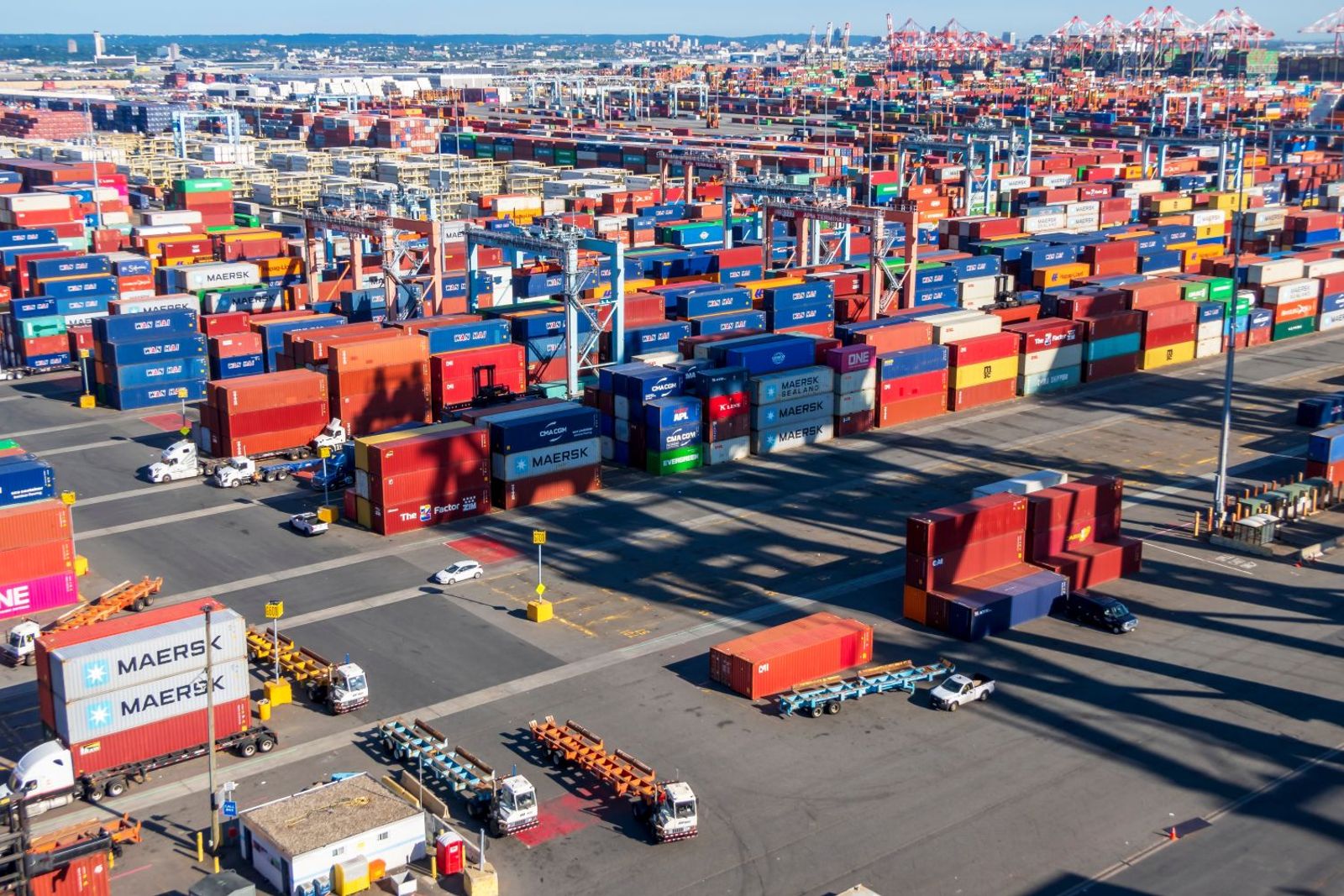
In September, U.S. container imports hit their highest level of the year, marking an unusually long peak shipping season that has kept major ports busy since spring. This has happened despite challenges like tariffs, inflation, and pressures on supply chains.
According to the National Retail Federation (NRF) and Hackett Associates' Global Port Tracker, ports managed 2.37 million twenty-foot equivalent units (TEUs) of loaded imports in September. This is a 12.6% increase from last year and a 3.4% increase from August.
September's total makes it the third-busiest month since records started, only behind July 2025 (2.39 million TEUs) and May 2022 (2.4 million TEUs).
This year's import season has exceeded expectations. NRF initially thought August would be the peak month, estimating September imports would drop to about 2.28 million TEUs. Instead, September's numbers surpassed that prediction by nearly 90,000 TEUs.
“U.S. ports have handled high volumes throughout this unusually long peak season, and numbers remain strong as the season comes to a close,” stated Jonathan Gold, NRF vice president for supply chain and customs policy.
However, this sustained volume hasn't come without issues. Some West Coast ports have experienced delays due to backups as containers wait to be moved to rail.
Labor talks have also caused uncertainty at the busiest container port complex in the U.S. The International Longshore and Warehouse Union’s Local 26, which represents about 250 watchmen at the ports of Los Angeles and Long Beach, is in negotiations for a new contract with the Pacific Maritime Association.
On Friday, both parties extended their existing agreement until November 20, preventing an immediate strike but leaving the longer-term conflict unresolved.
Despite these challenges, Gold noted that retailers are well-prepared for the holiday shopping season, with most seasonal products already in the country.
The extended peak season has been largely driven by shifts in U.S. tariff policies, encouraging retailers to adjust their shipment timings.
Ben Hackett, founder of Hackett Associates, mentioned that the import boom which started in 2025 seemed to be slowing down earlier this year after the Supreme Court removed the Trump administration's extensive “Liberation Day” tariffs.
However, new tariffs introduced in the second quarter sparked another wave of imports beginning in May, continuing until mid-October.
“Consumer spending sustained this influx, with households continuing to purchase goods despite rising inflation,” Hackett explained.
As the peak season winds down, Global Port Tracker anticipates imports will decline in the last months of 2026, although they are still expected to be higher than the previous year.
October imports are projected to be 2.26 million TEUs, up 9.1% from last year. November's forecast is 2.05 million TEUs, up 1.2%, followed by 2.03 million TEUs in December, which is an increase of 1.3%.
For the entire year, imports are now expected to reach 26 million TEUs, which is a 2% rise over the 25.4 million TEUs in 2025. This shows an upward revision from NRF's earlier October forecast of 25.8 million TEUs for the year.
Looking ahead, 2027 is expected to start slowly. January imports are projected at 2.04 million TEUs, down 3% year-over-year, followed by 1.89 million TEUs in February, down 0.5%, and 1.92 million TEUs in March, down 11.2%.
Global Port Tracker monitors loaded container imports at major U.S. ports located on the East, West, and Gulf coasts, including Los Angeles, Long Beach, New York/New Jersey, Savannah, and Houston.