
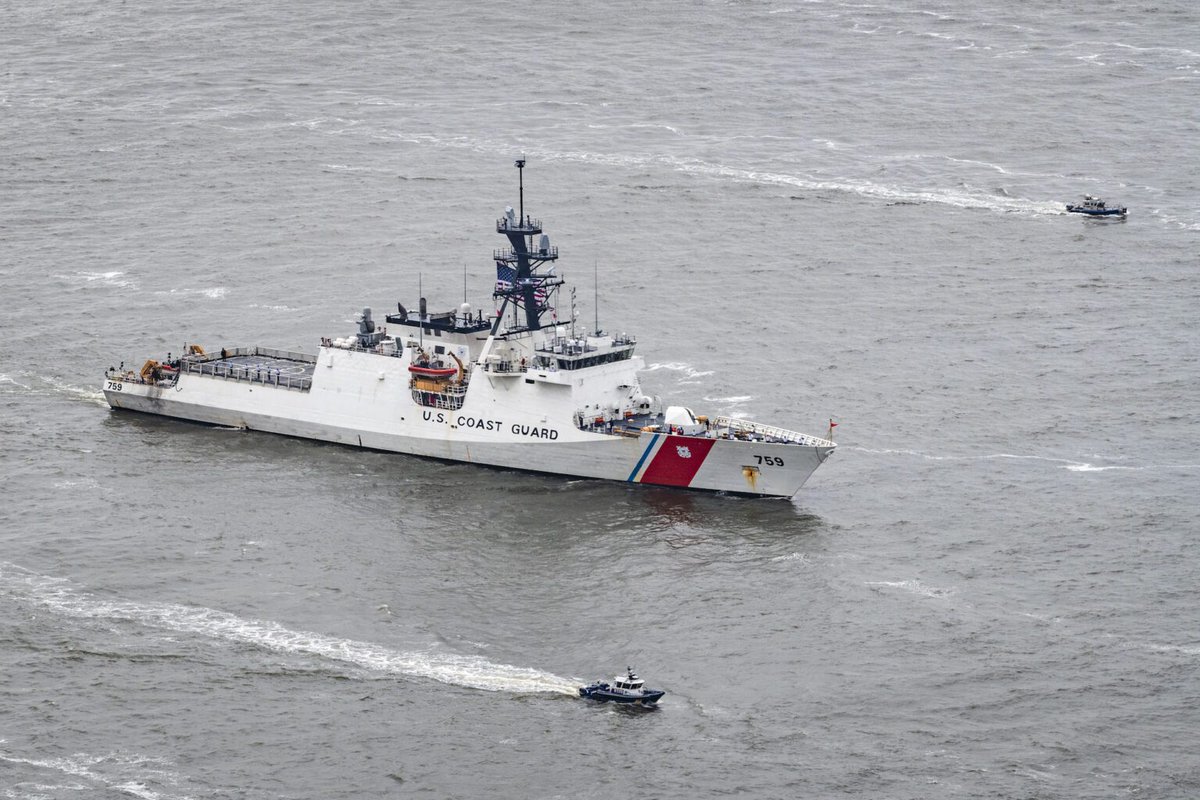
In a unique move, the U.S. Coast Guard (USCG) has made a call to the private shipping industry by issuing a Request for Proposals (RFP). They are asking commercial vessel operators to lease or contract their existing ships, which aims to rapidly grow the Coast Guard's fleet and strengthen maritime security along U.S. borders and key sea routes.
The Coast Guard is looking for “logistics and mission support vessels” that can be quickly brought into service to enhance their current resources. This includes support for operations ranging from the Caribbean to the Arctic.
David Smith, who is the deputy program manager for vessel sustainment at the Coast Guard, stated, “The USCG is inviting commercial providers to offer already built vessels that can quickly be integrated into our operations. The goal is to improve our readiness with proven commercial ships that can immediately boost our capabilities.”
This new solicitation follows the rapid addition of the USCGC Storis, which was previously the commercial icebreaker Aiviq. It was put into service in mid-2025, just nine months after its purchase.
Smith mentioned, “The Coast Guard is taking a groundbreaking approach to enhancing its capabilities by partnering with industry in new ways that speed up our timelines. The recent acquisition of the Storis, the first polar icebreaker in 25 years, illustrates this trend. The new RFP continues this momentum.”
According to the solicitation, the USCG is open to contracts for up to five years, with a total budget ceiling of about $99 million.
The invitation is unrestricted and welcomes any responsible shipowner whose vessel meets the requirements. The Coast Guard envisions these ships operating in various environments, including the Atlantic and Pacific Oceans, the Caribbean, the Gulf, and the polar areas.
The RFP includes general specifications requiring vessels to stay at sea for up to 30 days without needing resupply, a minimum range of 2,000 nautical miles, and the ability to endure sea conditions of at least “sea state 4.”
Moreover, vessels must accommodate a mixed Coast Guard crew, with space for up to twelve personnel, and be equipped to handle containerized cargo, such as at least four 20-foot IMO containers.
If successful, this RFP could allow the USCG to quickly expand its fleet, avoiding the usual lengthy construction and acquisition processes. Recently, the Coast Guard has suspended or canceled several acquisition contracts, including those for the Legend-class National Security Cutter and the Offshore Patrol Cutters.
As Smith noted, “This is an opportunity to engage, explore, and help shape the future of the U.S. Coast Guard.” Proposals for the solicitation are due in early January 2026.