
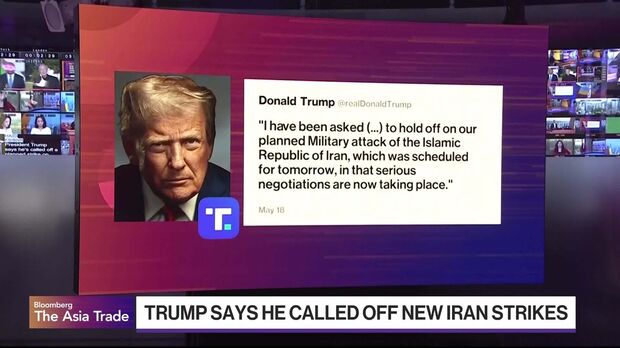
(Bloomberg) — US President Donald Trump announced that he postponed a planned attack on Iran, originally set for Tuesday, at the request of Saudi Arabia and other allies in the Persian Gulf, who are now advocating for a deal to end the conflict.
Trump stated that the US delayed the strikes “for a little while, hopefully maybe forever,” after extensive discussions with Iran, as he shared during a Monday evening address at the White House.
Earlier that day, he revealed that leaders from Saudi Arabia, Qatar, and the United Arab Emirates had urged him to halt the planned strikes on Iran, which were intended to proceed the next day.
According to a spokesperson from Qatar’s Foreign Ministry, diplomatic efforts are currently in motion to resolve the conflict following the outreach from Gulf leaders to Trump. However, Tehran has not confirmed any renewed talks.
On his Truth Social platform, Trump referred to the Gulf leaders—Saudi Crown Prince Mohammed bin Salman, UAE President Sheikh Mohamed bin Zayed, and Qatari Emir Sheikh Tamim bin Hamad—stating, “In their opinion, as Great Leaders and Allies, a Deal will be made, which will be very acceptable to the United States of America, as well as all Countries in the Middle East.”
Since the war began in late February and lasted until a ceasefire six weeks ago, the three Gulf nations experienced missile and drone attacks from Iran that damaged energy sites and port facilities.
Trump did not specify which targets US forces would have struck or what type of deal he would consider acceptable, other than it must ensure “no nuclear weapons for Iran.”
Since the truce was agreed upon on April 8, the President has frequently threatened renewed military action. Both sides have struggled to move toward a peace agreement and have engaged in clashes this month in the Strait of Hormuz.
This strait, crucial for global shipping, remains mostly closed, pushing energy prices higher and increasing the unpopularity of the war in the US. Fuel prices have surged to the highest levels seen in almost four years.
On Tuesday, Brent crude prices fell by about 1%, trading above $111 per barrel following Trump’s announcements the night before. Despite this dip, prices are still up more than 50% since the conflict began with US-Israeli strikes on Iran.
Bjarne Schieldrop, chief commodities analyst at SEB AB, noted, “These hot air verbal interventions from Trump used to have a heavy bearish impact on prices, but they now seem to have less and less effect unless they are backed by reality.” He added that there appears to be no significant progress in negotiations between the US and Iran, as both sides maintain their original demands.
Rising energy prices have raised concerns about higher inflation and sluggish economic growth globally, pushing yields on long-term US Treasury bonds to their highest levels in nearly two decades. Recent days have seen government bond yields increase as traders anticipate that central banks may need to tighten monetary policy.
The fragility of the truce was highlighted on Sunday when a drone struck the UAE’s Barakah nuclear energy plant, causing a fire at the power station and prompting engineers to activate emergency generators.
The UN’s nuclear watchdog reported late Monday that normal operations had been restored at Barakah, alleviating safety concerns regarding the largest atomic facility in the Middle East.
Trump’s remarks highlight the challenging situation he faces, as Iran's leaders, viewing the war as a serious threat, have taken a firm stance. They demand an end to the US blockade of Iranian ports, assurances of no further attacks, continued management of traffic in the Strait of Hormuz, and reparations for war damages.
Iran has also made it clear that it will not agree to a deal that comprehensively bans uranium enrichment, which is a significant objective for many US and Israeli officials.
Tehran has indicated it could strike its Gulf neighbors again if the US resumes its attacks. The UAE has been particularly vocal in its rhetoric and attempted, albeit unsuccessfully, to coordinate strikes on Iran with the six-member Gulf Cooperation Council at the beginning of the war. Both it and Saudi Arabia have conducted limited attacks independently, according to sources familiar with the situation.