
(Bloomberg) —
The recent seizure of a large oil supertanker off the coast of Venezuela marks the start of a new phase in the Trump administration's intensified efforts against Nicolas Maduro, according to sources involved in the operation.
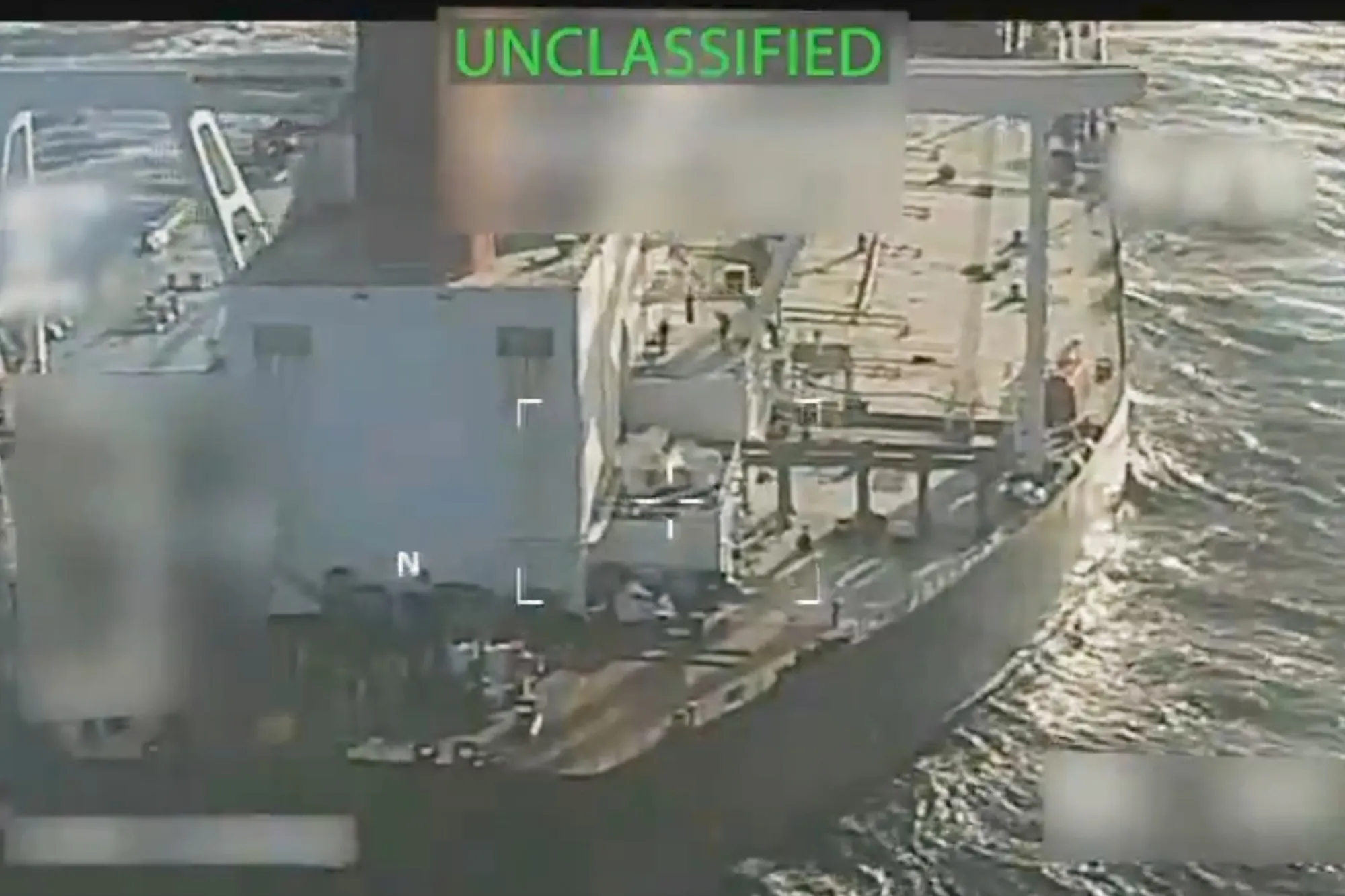
This operation included US forces coming down from a Black Hawk helicopter onto the deck of a sanctioned very-large crude carrier named Skipper. The aim is to cut off Maduro's oil revenue and push him to give up power, insiders say.
“We will not stand by as sanctioned vessels carry black-market oil that funds narco-terrorism globally,” said White House Press Secretary Karoline Leavitt in a Thursday briefing.
The US is already following up on the tanker seizure, with the Treasury Department imposing sanctions on six crude oil tankers and four individuals tied to Maduro, often referred to as his “narco-nephews.”
According to sources, Maduro's close associates are urgently searching for ways to adapt to the possibility of more US seizures of sanctioned ships. Specifically, leaders at Petroleos de Venezuela SA, the state oil company, are figuring out how to export oil to China, which purchases most of Venezuela's oil through intermediaries.
About 80% of Venezuela's export revenue comes from oil, although this figure likely underestimates its significance in terms of Venezuela's relationship with Cuba.
“This escalates the pressure on Maduro's regime,” stated Juan Cruz, who was a senior director for Western Hemisphere affairs at the National Security Council during Trump's first term. “This is another step to restrict their operations and tighten the squeeze on them.”
The tanker seizure has unsettled oil markets and follows President Donald Trump's order for a significant US military buildup in the region, raising concerns of potential conflict after strikes on suspected drug trafficking boats. This event highlights additional strategies available to Trump and Secretary of State Marco Rubio as they look for ways to remove the Venezuelan leader without escalating to war.
This week, Trump remarked that Maduro’s “days are numbered.” He confirmed the tanker seizure on Wednesday and hinted at “other things happening,” likely referring to possible military actions, including land strikes he has hinted at recently.
While the US has been targeting alleged drug boats for months—resulting in over 80 deaths in a legally contentious military campaign—polls indicate that a full-scale war would be unpopular among the American public.
Nonetheless, the Trump administration believes that ending Maduro's rule would trigger a domino effect in the region that could address major issues like the opioid crisis fueled by drug cartels and illegal immigration from Latin America.
Rubio has accused Maduro of election theft, ties to drug cartels, and creating broader instability in the Western Hemisphere, noting Venezuela's alliances with Iran and support for the militant group Hezbollah. Amid an economic crisis, Maduro's regime has driven over eight million Venezuelans to flee, adding pressure on neighboring South American countries and the US.
Officials believe a change in Venezuela—which is larger than France and Germany combined—could significantly impact Latin America, especially as other governments in the region tend to adopt conservative policies.
Rubio hopes Colombia will vote next year for a candidate who will overturn many policies of the leftist president Gustavo Petro, frequently at odds with the US. Bolivia recently elected a conservative leader for the first time in decades, and Chile appears poised to elect a conservative this weekend.
Rubio, who is of Cuban descent and now serves as Trump's acting national security advisor, aims to end Venezuela's economic support for Cuba's Communist regime, which has relied on Venezuelan oil for years due to the long-standing US trade embargo.
US officials believe the seized tanker was headed for Cuba, although it would be atypical for such a large vessel to transport oil directly between the two countries based on past shipping patterns.
“This might be part of a broader strategy to cut ties between Havana and Caracas,” said Geoff Ramsey, a Venezuela expert and senior fellow at the Atlantic Council. “Maduro likely wouldn't be in his current position without Cuban support. The US is trying to create distance between these two nations.”
US officials have long suspected that Maduro's regime sells sanctioned crude oil through Cuba to benefit from profits while keeping transactions less traceable. A supertanker like the one seized can carry about two million barrels of oil, worth around $115 million at current prices, although Venezuelan oil is sold at significant discounts due to sanctions risks.
While the US may not be able to seize every tanker, it could potentially disrupt the market significantly enough to drive up insurance costs, making it unprofitable to transport Venezuelan oil.
This week's actions may lead to much higher insurance premiums for shippers and could dissuade the essential shadow fleet of sanctioned vessels that transport around 30% of Venezuela's oil exports, according to the consultancy Rapidan Energy Group.
“The Trump administration is serious about this, and it seems that very little will be able to move in or out of Venezuela without US approval,” said Kimberly Breier, who served as assistant secretary of state for Western Hemisphere Affairs during Trump's first term. “This escalation is significant, a logical next step in the sanctions campaign, which will deprive Maduro and his regime of the necessary funds to maintain power.”