
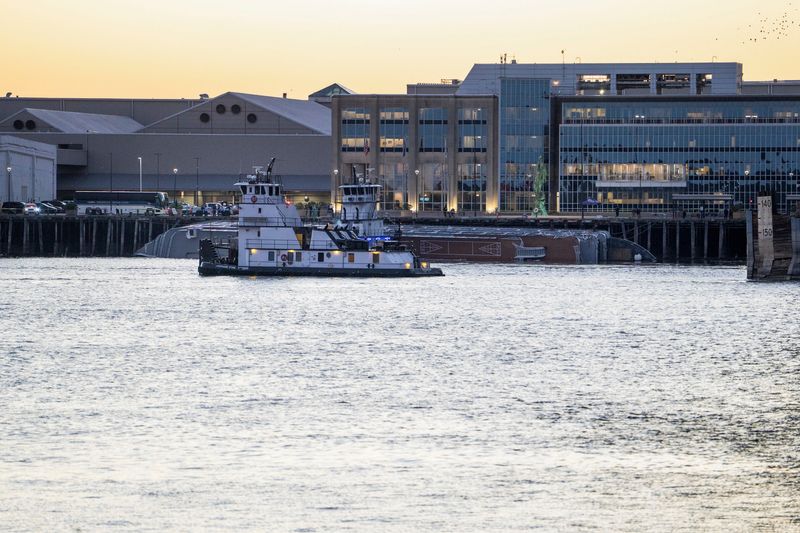
On November 15, the U.S. Transportation Safety officials reported that the asphalt tanker that collided with a docked paddlewheel cruise boat in the Mississippi River last week had a steering issue. Its rudder was stuck in one position.
The cruise boat, named American Heritage, had 190 people on board and capsized while docked. Fortunately, there were no fatalities from the collision that occurred on Friday.
The Atlantic Asphalt tanker was traveling upriver when it faced a "steering casualty," causing its rudder to stay in a right position. This made the vessel drift toward the east bank of the river. Bart Barnum, a senior marine accident investigator with the National Transportation Safety Board (NTSB), shared this information during a news conference in New Orleans.
Officials from the NTSB stated that the cause of the steering problem is still unknown. The tanker’s voyage data recorder was retrieved on Saturday.
Investigators analyzed over nine hours of recorded data, which includes bridge audio, rudder position, engine performance, and speed. Barnum mentioned that the data showed the tanker was moving upriver near the Crescent City Connection Bridge at about 12:26 p.m. local time, just two minutes before the crash when it encountered the steering problem.
According to NTSB officials, the cruise ship capsized approximately 22 minutes after the incident. As the American Heritage overturned into the river, harbor workers, firefighters, and witnesses rushed to help the passengers.
The audio from the recorder captured sounds such as the vessel’s whistle, radio alerts, requests for help, and commands for emergency maneuvers, including anchor deployment.
Ongoing investigations are focusing on whether the tanker’s anchors were used and to what depth, along with interviews of the crew and passengers. NTSB officials announced that interviews with the Atlantic Asphalt crew are scheduled for the upcoming week.
A preliminary report from the agency is expected in about 30 days.