
By Souhail Karam
Dec 9, 2025 – Morocco is moving closer to establishing a nearly $1 billion liquefied natural gas (LNG) hub at a new deep-sea port on its Mediterranean coast. The goal is to increase imports and reduce reliance on more polluting fuels.
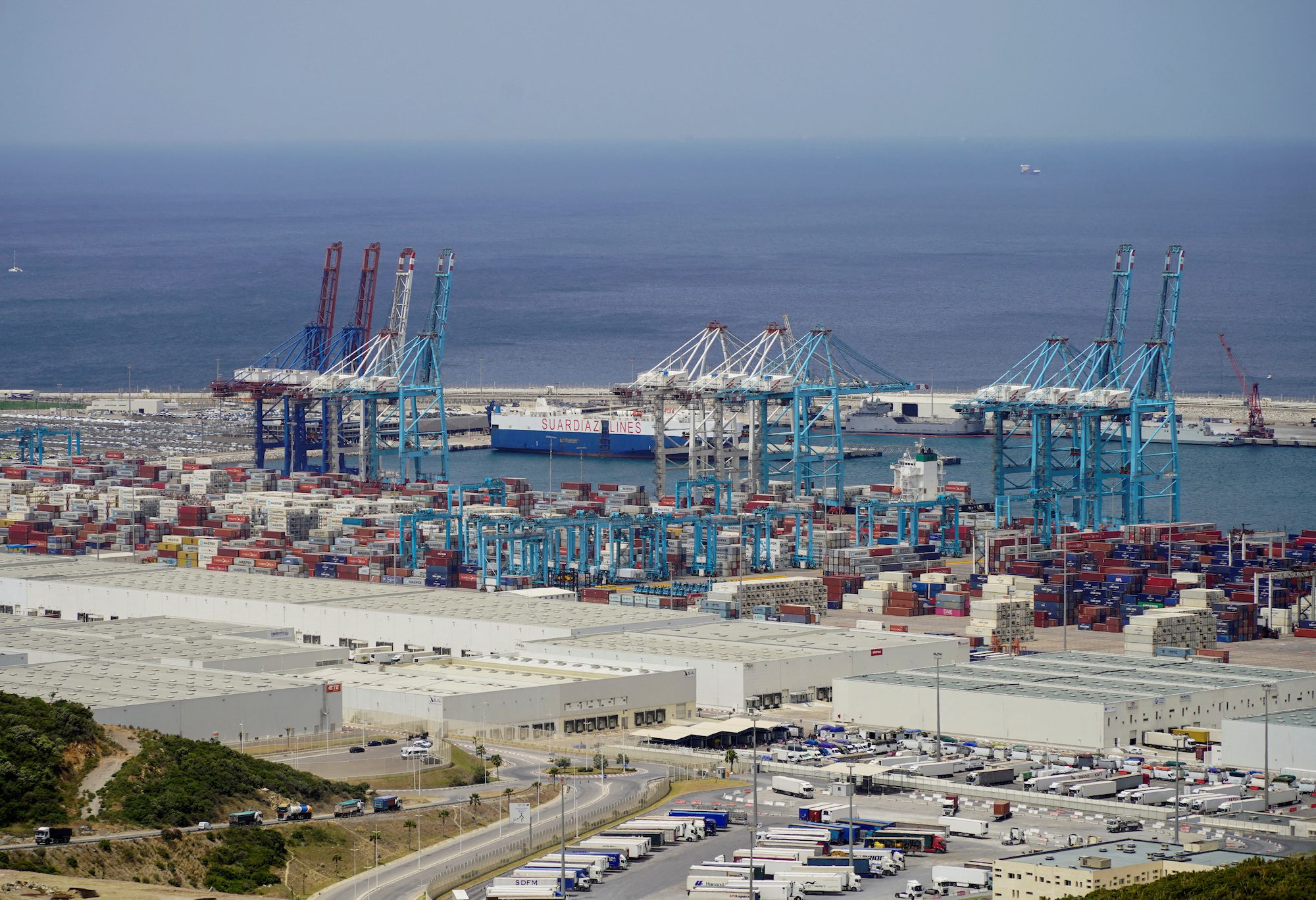
This week, Morocco issued a tender for a company to provide a floating storage and regasification unit (FSRU), which will be located at the Nador West Med port, expected to begin operations next year. The country is also seeking firms to build, finance, and operate new pipelines that will connect the port to major industrial areas.
Morocco aims to be a significant player in LNG imports, with plans to invest $3.5 billion to increase gas consumption from 1.2 billion cubic meters to 12 billion cubic meters by 2030. These new projects are essential for offsetting the loss of gas supplies from Algeria, which stopped in 2021 due to a diplomatic disagreement. Additionally, gas is a crucial transition fuel for manufacturing industries that export to Europe.
The Ministry of Energy Transition and Sustainable Development estimates the cost of the FSRU will be around $273 million, while the new pipelines will need about $681 million in investments. These pipelines will connect to the Maghreb-Europe link, which is how Morocco imports gas from Europe. The projects are also intended to create a gas network that could eventually transport green hydrogen both domestically and internationally.
Morocco's gas plans involve spending $1.5 billion on infrastructure to import LNG to replace dirtier fuel sources like fuel oil and coal in the industrial sector. Additionally, there is a plan to invest $2 billion in building gas-fired power plants that would triple the amount of electricity generated from gas.
The country aims to decarbonize its economy by 2050, which includes phasing out coal and expanding solar and wind energy, along with battery storage solutions. Authorities anticipate about $11 billion in investments to add 12.5 gigawatts of renewable energy capacity between 2025 and 2030, making up around 80% of all new installed capacity during that time.
“Gas will only play a limited role in replacing coal, while the planned growth in renewable energy is expected to be a much larger share of new capacity,” stated Rachid Ennassiri, director of the Imal Initiative for Climate and Development.
Proposals for the FSRU tender will be reviewed in early February, with pre-qualified candidates for the new pipelines expected to be announced around the same time.