
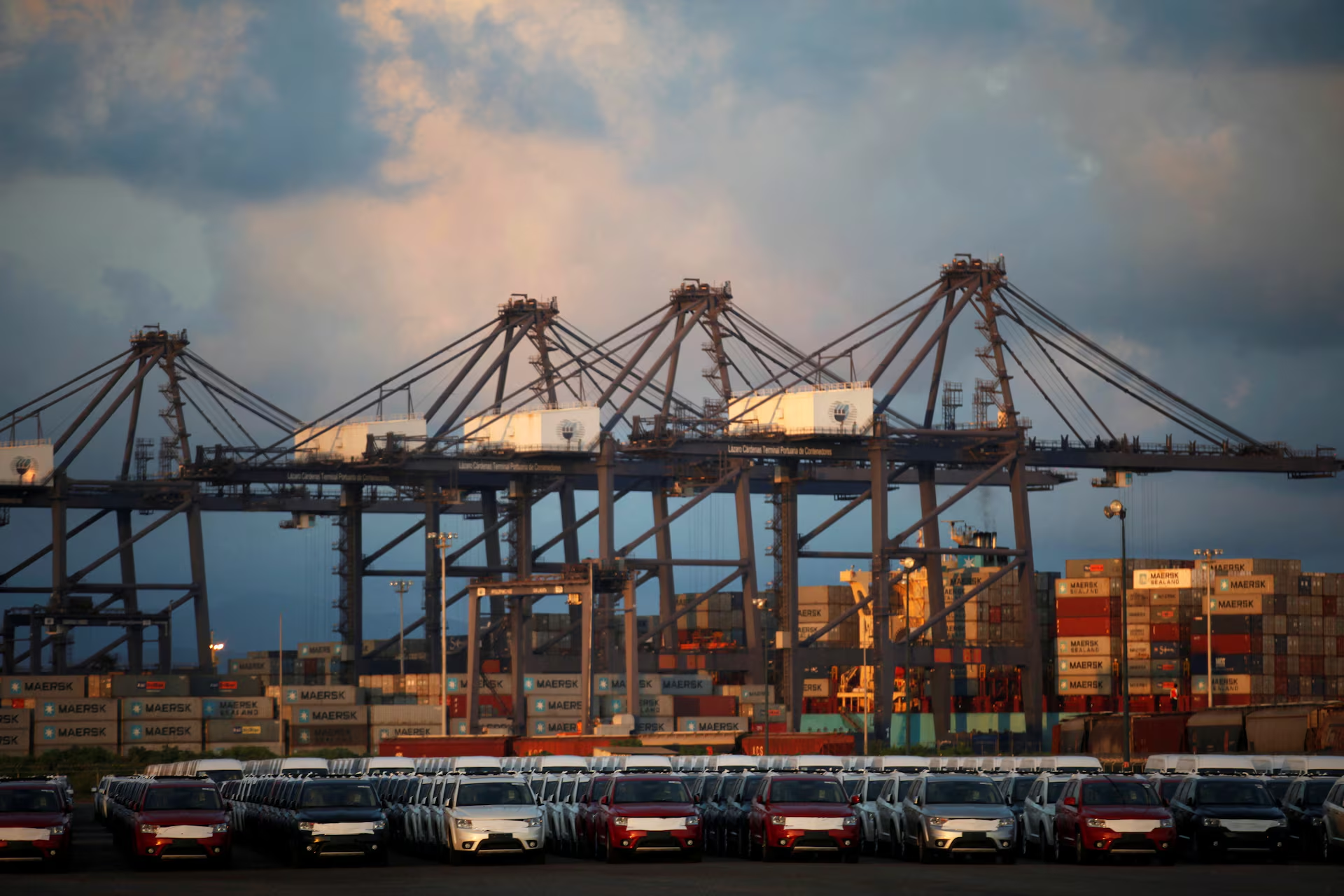
MEXICO CITY, Oct 8 (Reuters) – Mexico's car exports have fallen sharply, with the biggest drop this year, according to data from the statistics office INEGI. Analysts believe this decline is due to tariff policies from the US, which is the primary market for Mexico's automotive industry.
In September, car exports from Mexico dropped by 12% compared to the same month last year, marking the largest decrease since December 2025. Additionally, monthly production fell by 15%. On a positive note, domestic sales rose by 8%, providing some relief for this vital manufacturing sector.
This news comes as government officials are reviewing the US-Mexico-Canada free trade agreement. Even with ongoing negotiations, Mexican-made cars are still subject to a 25% tariff. Mexican officials estimate that if they follow rules to use North American-sourced parts, this tariff burden could be reduced to between 10% and 12%.
Over the last three decades, the economies of the US and Mexico have become closely linked through various free trade agreements. However, recent changes in policy and tariffs during the Trump administration have shaken trust among business owners in established supply chains.
“This has created more uncertainty for car manufacturers, affecting their production and export choices,” said Janneth Quiroz, the economic analysis director at Monex. She warned that Mexico's dependence on the US market poses the biggest risk for the sector.
“The data from September is a warning rather than a crisis sign,” she added. “If this trend continues into 2027, we could face a more fundamental problem for Mexican manufacturing.”
Last year, General Motors announced a $4 billion plan to shift some production back to the US from Mexico due to the complicated tariff landscape. In September, both Ford and Nissan also reported significant declines in exports.
Mercedes-Benz, which closed a joint plant with Nissan last May, did not produce or export any cars last month, marking the first time this has happened since it began shipping cars abroad eight years ago.
On the other hand, companies like South Korea's Kia, Germany's BMW, and Japan's Mazda stepped up production, with Mazda more than doubling its monthly exports.
During a press conference on Wednesday, Mexico's main auto chamber, AMIA, stated that Mexico continues to be the largest foreign supplier of cars in the US, accounting for 16% of light vehicle sales in a market that has contracted by 2% so far this year.
AMIA's data also showed that while exports to the US fell by 5% in the first nine months of 2026, exports to Canada, Mexico's second-largest market, increased by just over 9%.
Analyst Alejandra Vargas from Ve Por Mas, or Bx+, cautioned that a prolonged slowdown could affect investment decisions for automakers, along with Mexico's manufacturing activity and overall economic growth.
“The future of the trade relationship between Mexico and the United States will remain the main factor influencing the industry's direction in the upcoming months,” she noted.