
October 7, 2026 – The Houthis, a militant group supported by Iran, have attacked two airports in Saudi Arabia over the past two days, resulting in three deaths and numerous injuries as they escalate their assaults on the kingdom from Yemen.
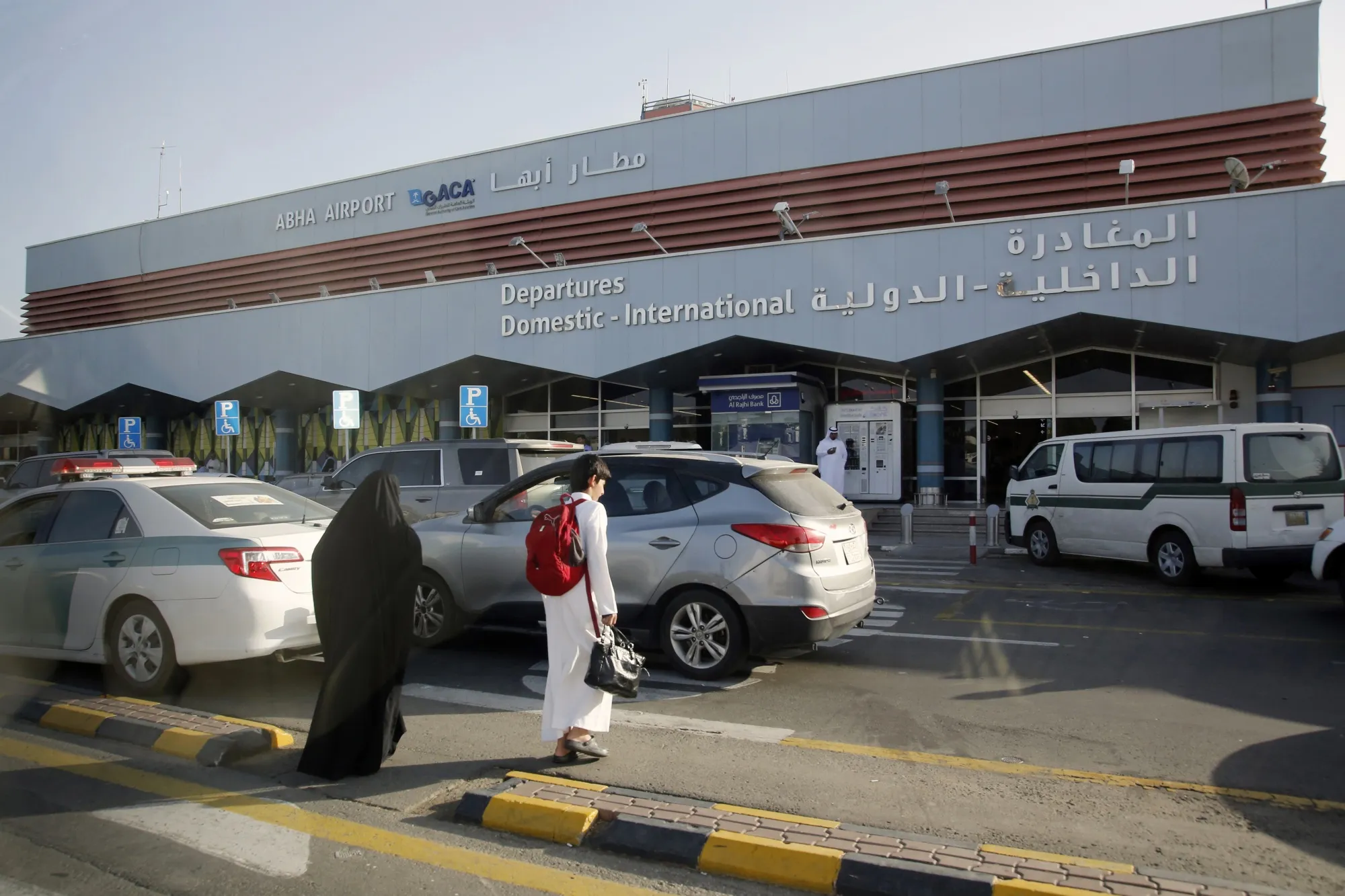
On Tuesday and Wednesday, King Khalid International Airport in Riyadh and Abha International Airport in the southwest faced attacks, according to the Saudi General Authority of Civil Aviation. The Houthis have claimed responsibility for these strikes.
A Sudanese man was killed in the attack on Riyadh airport, and five Saudi citizens, two Egyptians, and a Pakistani sustained injuries. In the attack on Abha airport, two women—a Moroccan and an Algerian—were killed, while 28 others were injured, some seriously.
In Yemen, the Houthis are currently under pressure from a Saudi-led coalition conducting a ground offensive. Forces from the internationally recognized Yemeni government and the Saudi air force are aiming to reclaim territory that the Houthis have gained recently near the strategic Bab el-Mandeb strait.
This offensive began on Sunday, and the coalition reports that they have made progress, including regaining control of the Red Sea port city of Mokha. Their goal is to "eliminate" the Houthis, who control areas that are home to about 70% of Yemen's population, including the capital, Sanaa.
Rising Tensions Between US and Iran
At the same time, tensions between the US and Iran are escalating with no signs of a peace agreement in sight. The White House has reportedly asked the Pentagon to prepare options for potential attacks against Iran before the midterm elections scheduled for November 3. Discussions about the scale and targets of possible strikes are ongoing.
Iran has been increasing its attacks on shipping in the Persian Gulf and near the Strait of Hormuz. A tanker was hit by projectiles off the coast of Qatar on Wednesday, marking the first confirmed incident of this type in about a month. UKMTO, a British organization connecting commercial shipping with military authorities, reported that there have been nine attacks near Hormuz this month, which is about half the total reported in September.
Due to the rising tensions, oil prices have surged, with Brent crude climbing nearly 4% to $104.10 a barrel. This spike has caused a new wave of selling in both bond and stock markets globally.
The Saudi General Authority of Civil Aviation is currently assessing the damage at the airports and ensuring the safety of the facilities. The kingdom reported that the coalition retaliated by targeting 82 military sites of the Houthis in Yemen, focusing on areas such as Saada, Hodeida, Jawf, and Marib.
These sites included ballistic missile storage and command centers. A coalition spokesperson, Turki Al-Maliki, stated that the Houthi attacks on civilian areas will not go unpunished. On Wednesday morning, it was reported that a ballistic missile launched by the Houthis was intercepted north of Riyadh, and the launch platform used for this attack was later destroyed in Sanaa.
Houthi Activities
The Houthis, a key proxy group for Tehran, captured Sanaa in 2014, which marked the start of Yemen's ongoing civil conflict. They resisted a Saudi-led bombing campaign until a ceasefire was reached in 2022.
In July, the Houthis, who had mostly avoided involvement in the US-Israel conflict regarding Iran, announced a blockade on Saudi ports, alleging that the kingdom was besieging parts of Yemen.
Since early September, hostilities have intensified as the Houthis have begun daily attacks on Saudi territory and advanced southward from their western stronghold toward the Bab el-Mandeb, a vital route for energy and commercial shipping.
(Updates with additional analysis and context.)