
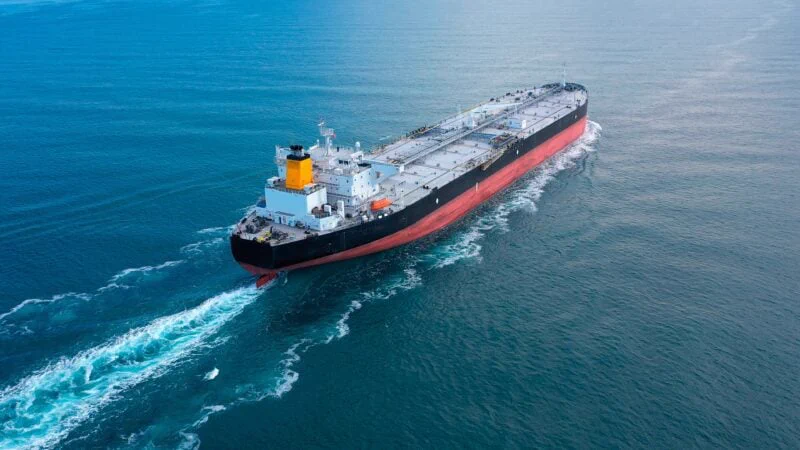
Foreign tankers transported over $40 million worth of oil products between U.S. ports without being listed in the federal government’s public Jones Act waiver reports. This concerning finding comes from an analysis by Bloomberg Government, which raises doubts about the accuracy of the official records.
Bloomberg revealed on Thursday that at least a dozen ships owned by entities from China and other nations moved cargo from the Gulf Coast to both the East and West coasts, as well as Puerto Rico, without submitting the necessary voyage information to the U.S. Maritime Administration (MARAD). MARAD confirmed this activity to Bloomberg.
These missing reports are significant because MARAD’s public records have become the main source for tracking how much foreign shipping has been utilized in U.S. domestic trades since an emergency waiver was issued in March.
Under federal law, vessel owners or operators utilizing a waiver must report completed voyages to MARAD within 10 days. This report should include details such as the vessel and operator names, voyage dates, ports, cargo, and a justification for why the movement serves national defense interests. MARAD must publish the report within 48 hours of receipt.
“It's outrageous that foreign operators are not reporting their movements under the waiver,” said Jennifer Carpenter, President of the American Maritime Partnership. “The law clearly requires reporting, as highlighted by the U.S. Customs and Border Protection notice regarding the waiver.”
MARAD informed Bloomberg that it does not have the authority to enforce compliance with the reporting requirement. Instead, U.S. Customs and Border Protection handles Jones Act enforcement and can impose penalties for non-compliance. However, CBP did not provide any comments to Bloomberg regarding the unreported voyages. MARAD’s website directs any potential violations to CBP’s Jones Act Division of Enforcement.
Bloomberg identified these unreported voyages by comparing data from the National Ballast Information Clearinghouse with vessel calls and cargo information from AIS, Vortexa, and IHS Maritime and Trade data. None of the identified voyages appeared in MARAD’s regular public waiver reports.
“MARAD is our only connection to what is happening out there,” said David Heindel, President of the Seafarers International Union. “If they’re not getting it, it’s troubling.”
This discovery raises concerns about the accuracy of MARAD’s increasing count of completed waiver movements.
A review by gCaptain of MARAD’s latest report, dated September 16, indicated 255 completed movements related to the original waiver issued on March 17 and its extension on May 18. This represents an increase from 220 movements noted in the dataset reviewed by gCaptain on August 14. These filings include crude oil, gasoline, diesel, jet fuel, renewable fuels, ethanol, ammonia, and other cargoes.
Bloomberg’s findings suggest that even this updated total might not fully represent foreign vessel activity under the waiver.
The latest MARAD submissions also reveal instances of reporting after the required deadline. For example, the Navigator Genesis, which transported 132,000 barrels of propane to San Juan, is listed in MARAD’s September 16 report with a due date of September 10 and a reported date of September 14. The new report format requests significantly more information about vessel ownership, charterers, managers, and controlling companies, but several fields in these submissions remain marked as “Pending Response.”
Critics of the waiver claim that allowing foreign vessels to participate in domestic trades disadvantages U.S.-flag operators. Aaron Smith, president and CEO of the Offshore Marine Service Association, told Bloomberg that the previously unreported journeys indicate that foreign competition is higher than MARAD’s figures suggest.
“It’s time for the Administration to end the waiver, and it’s also time for Congress to conduct thorough oversight of the waiver process,” Carpenter stated.
On the other hand, supporters of the waiver see it differently. Colin Grabow from the Cato Institute, who opposes the Jones Act and played a role in identifying some unreported voyages, told Bloomberg that these additional movements demonstrate the waiver has allowed for more domestic energy shipments than previously indicated by government data.
The Jones Act generally limits cargo transport between U.S. locations to vessels that meet U.S. ownership, construction, and documentation standards. The current waiver was enacted under national defense regulations amid energy market and shipping disturbances due to the ongoing conflict in the Middle East.
Bloomberg’s discoveries also highlight a gap in MARAD’s reporting system. Although companies must disclose completed waiver voyages, MARAD claims it lacks the authority to enforce compliance. This means that MARAD’s public reports remain the best available record of foreign-flag movements under the waiver, despite potentially omitting crucial details.