
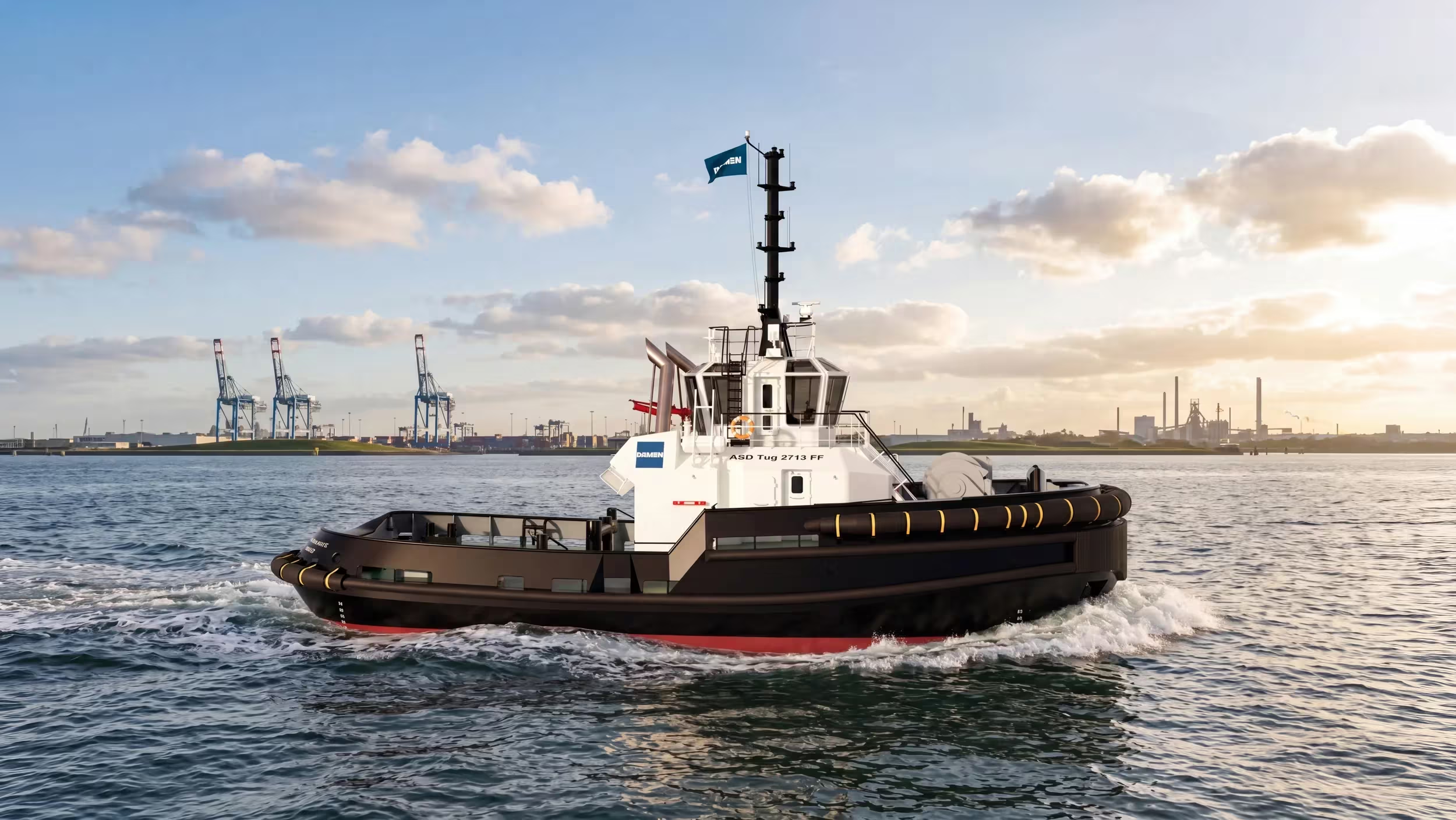
Damen Shipyards Group has received approval from the class and flag state for its ASD Tug 2713 Fuel Flexible (FF) to operate using methanol fuel. This approval was granted by Bureau Veritas and the flag state of the Kingdom of the Netherlands. It follows a previous in-principle approval (AiP) Damen received in 2023 for its design of methanol-powered compact vessels.
The ASD Tug 2713 FF measures 27.25 by 12.83 meters and serves multiple purposes. It is designed for coastal and harbor operations, including support for LNG terminals, ship handling and berthing (push-pull, escort), oil spill control, and firefighting.
Built for Today, Ready for Tomorrow
Damen’s FF Tugs are equipped to perform current operations with diesel engines, while also enabling navigation on 100% HVO (Hydrotreated Vegetable Oil). They are designed with flexibility for future energy options. Depending on future market dynamics, they can be converted to hybrid-electric or methanol propulsion systems.
The tugs come with methanol tanks and space is reserved for installing the necessary propulsion equipment. This allows vessel operators to invest in alternative fuels when the situation is clearer and they can expect a good financial return. The FF tugs are competitively priced per ton of bollard pull compared to conventional vessels.
Promise of Future Fuels
Damen believes methanol is a promising future fuel for tugs due to its high energy density and existing infrastructure. Moreover, methanol is available from various sources, both renewable and non-renewable, which helps scale production and ensures supply security and price stability.
However, until now, classification rules have primarily focused on larger vessels like chemical tankers, which are not suitable for smaller vessels such as tugs. To address this, Damen worked closely with Bureau Veritas and the Dutch flag state to get approval for using methanol in the ASD Tug 2713 FF.
This process required a risk-based approach. The three parties conducted a thorough risk assessment and developed strategies to minimize identified risks, ensuring that the design is as safe as traditional class-approved designs. This method allows for the continued construction of compact vessels with methanol systems.
Important Milestones
“This is a major advancement for our FF Tugs line,” says Pieter Spruijt, System Owner Alternative Fuels at Damen. “Having class and flag state approval for the ASD Tug 2713 FF confirms that the AiP we received in 2023 is applicable to different models in our range. Due to the similarities across our models, this clears the way for approving other FF variants. This is great news for vessel operators, providing them with more assurance in their investment choices.
“I want to thank both parties for their support during this process. I'm continually impressed by the Kingdom of the Netherlands flag state’s commitment to making the Dutch fleet more sustainable through innovation. We have a strong partnership with Bureau Veritas, and I'm thrilled that they have approved our methanol-powered tug alongside our diesel offerings.”
Herman Spilker, Vice President North Europe at Bureau Veritas, stated, “Bureau Veritas is proud to assist Damen in achieving both AiP and the approval of the first methanol Tug design. I see a bright future for compact vessels powered by methanol, as operators increasingly seek alternatives to traditional fuels.”
With these approvals, Damen can build tugs prepared for methanol, moving the European Union closer to introducing fully methanol-fueled vessels. This significantly contributes to the goal of achieving zero emissions in maritime operations.