
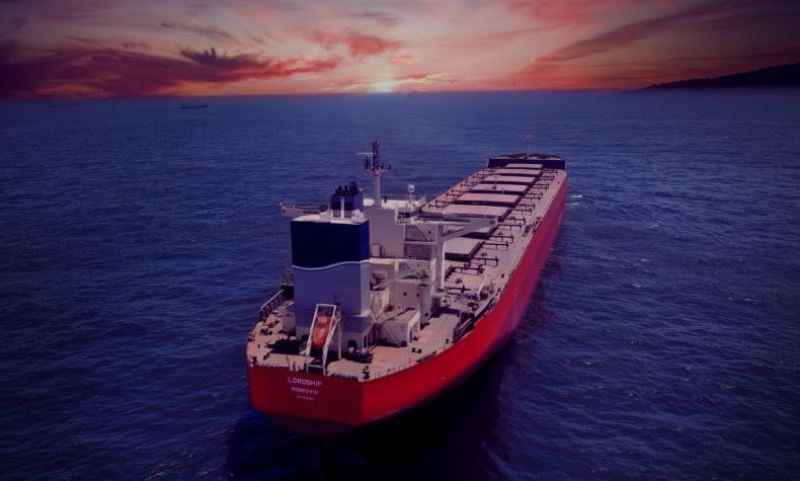
The dry bulk shipping industry has seen a big drop in new ship orders. From January to November 2025, the capacity for ordering new bulk carriers fell by 54% compared to the previous year, totaling 25 million deadweight tonnes, according to data from BIMCO.
This decline marks the lowest level of new ship orders since 2020, with only 281 vessels ordered this year, a 61% decrease from 2024 and the fewest since 2016. As a result, the dry bulk orderbook is now 4% smaller than last year, making up 11% of the total dry bulk fleet.
“From January to November 2025, the capacity for ordering new bulk carriers decreased by 54% year-over-year to 25 million DWT, hitting its lowest point since 2020. Consequently, the dry bulk orderbook is now 4% smaller compared to last year, which represents 11% of the fleet. This slowdown is likely due to a less optimistic market outlook,” stated Filipe Gouveia, Shipping Analysis Manager at BIMCO.
The decline in orders is not the same across all ship types. While all segments have seen fewer orders, the capesize segment, which includes the largest ships in the dry bulk market, has experienced somewhat higher activity. This is due to stronger predictions for freight rates for capesize ships in the next two years, driven by expected increases in sailing distances. Although there is softer cargo growth, limited supply growth and delays in deliveries mean that 77% of new capesize orders are set for delivery after 2027.
On the other hand, the supramax and panamax segments have faced sharper declines, with orders down 76% and 55% year-over-year, respectively. These segments have larger existing orderbooks and are expecting an uptick in ship deliveries in 2026 and 2027 amidst weak demand forecasts.
“Contracting for the supramax and panamax segments has dropped significantly, down 76% and 55% year-over-year, respectively. Both segments already have relatively large orderbooks and expect more deliveries in 2026 and 2027. Meanwhile, the outlook for demand is weak, and a potential return of ships to the Red Sea could further hurt demand for these types. These factors may lead to lower freight rates over the next two years, which can deter new ship orders,” Gouveia explained.
The possibility of ships returning to the Red Sea adds another risk to demand for the smaller vessel categories.
Chinese shipyards continue to lead in the bulk shipping sector, securing 81% of new orders by capacity—up from 72% in 2024, mainly at the expense of Japanese yards. This preference for Chinese shipyards remains strong, even with previously announced but now paused USTR port fees on Chinese-built ships. The limited effect of these measures could be due to the fact that shipments to or from the U.S. represent only 8% of global cargoes, along with several fee exemptions.
Economic factors show a mixed picture for potential buyers. New ship prices have decreased by 3% since the start of 2025, while prices for five-year-old second-hand ships have risen by 4%. Currently, used vessels are selling for an average of 93% of newbuild prices, reflecting improved market conditions and freight rates in the second half of the year. However, longer lead times mean that ships ordered now might be delivered under very different market conditions.
Environmental issues continue to influence ordering habits, but with changing priorities. Although the share of new contracts for ships using alternative fuels has declined in 2025, the share designed for future retrofitting has increased, indicating ongoing uncertainty about the availability of alternative fuels.
“In 2025, the percentage of ordered ships designed for alternative fuels has decreased, but the share intended for future retrofitting has risen, possibly due to ongoing uncertainty about alternative fuel supplies. Currently, 12% of the orderbook may use alternative fuels upon delivery, with 48% able to use methanol, 37% LNG, and the rest ammonia,” Gouveia noted.
As it stands, 12% of the current orderbook is capable of using alternative fuels at delivery, with methanol making up 48%, LNG 37%, and ammonia accounting for the remainder.