
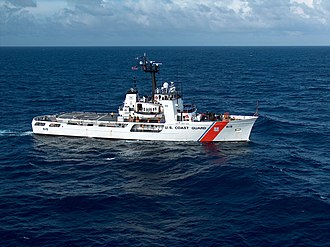
Austal USA recently celebrated an important moment in the U.S. Coast Guard's Offshore Patrol Cutter program with the keel authentication for the Pickering (WMSM 919). This cutter is the first of the Heritage-class cutters to be constructed at their Mobile shipyard.
During a traditional shipbuilding ceremony, which was attended by acting Coast Guard Commandant Admiral Kevin Lunday and Representative Mike Ezell from Mississippi, ship sponsor Dr. Meghan Pickering Seymour welded her initials onto a special keel plate with the help of Austal welder Ravi Khamsourin. Dr. Seymour is the great-great-great-great-great-granddaughter of Colonel Timothy Pickering, who was associated with the first revenue cutter named Pickering, launched in 1798.
“Reaching this key milestone for the Coast Guard's Offshore Patrol Cutter program is a big achievement that shows our commitment to delivering the cutters on time,” said Austal USA President Michelle Kruger at the ceremony. “Today's event reflects the hard work and dedication of our skilled workforce, as well as the strength of the shipbuilding team made up of Austal USA, the Coast Guard, and our suppliers.”
This ceremony comes at a critical time for the OPC program, which has been facing significant delays and rising costs. A recent report from the Government Accountability Office revealed serious issues affecting the entire acquisition effort, with costs jumping from $12.5 billion to $17.6 billion.
The GAO found that the Coast Guard's approach of building ships before their designs were finalized has been harmful for the stage 1 contractor, Eastern Shipbuilding Group. They have made little progress and had half of their original four-ship contract terminated in July. Eastern has since halted work on the remaining two vessels due to serious financial difficulties.
The GAO also indicated that Austal, as the stage 2 contractor, may be following a similar troubled path. “Construction of OPC 5 began in August 2024 without a stable design,” the report noted, warning that building more stage 2 vessels before finalizing the design could lead to costly reworks and delays.
Rear Admiral Chad Jacoby, deputy commandant for systems and chief acquisition executive, expressed optimism at the ceremony. “This event shows the progress made towards delivering this crucial asset to the nation,” Jacoby remarked. “With the design and modeling activities for the OPC complete and production starting, we are progressing towards updating our medium endurance fleet.”
The 360-foot OPC will be key to the Coast Guard’s offshore operations, handling law enforcement, drug and migrant interdiction, and search and rescue tasks. Each vessel, with a range of 10,200 nautical miles at 14 knots and a 60-day endurance, will be able to operate alone or as part of task groups during emergencies or major incidents. These cutters will also aid Arctic initiatives by regulating and protecting new commerce and energy exploration in Alaska.
The Pickering is expected to be delivered in 2027 and will be the third Coast Guard vessel with that name. Construction of the second OPC, Icarus (WMSM 920), is already underway, having started in August. Austal has a contract for up to 11 cutters, valued at $3.3 billion, with six currently under contract.
The Coast Guard aims to acquire a total of 25 OPCs as part of the Department of Homeland Security's layered security strategy. These vessels will complement national security cutters, fast response cutters, and polar security cutters, addressing the Coast Guard’s long-term needs for ships capable of securing U.S. borders and maritime routes, while also supporting vital maritime commerce.
Despite the challenges facing the program, the Trump administration has committed nearly $25 billion to the Coast Guard through the “One Big Beautiful Bill” and “Force Design 2028,” which aims to reshape the Coast Guard into a more efficient and capable force.
The GAO has recommended four steps to tackle the program’s problems, including finalizing the stage 2 design before allowing further construction and creating a detailed plan for stage 3 procurement that considers testing outcomes and shipbuilding best practices. However, the Department of Homeland Security has only agreed with two of these recommendations.